
leave a message
If you are interested in our products and want to know more details,please leave a message here,we will reply you as soon as we can.


Setting up an SPC flooring manufacturing plant requires more than purchasing an extrusion machine. A complete production setup needs the right equipment for raw material preparation, extrusion, sheet forming, lamination, cooling, cutting, quality inspection, and material handling. The exact configuration depends on the flooring structure, required production capacity, product dimensions, and the level of automation planned for the factory.
For manufacturers entering the stone plastic composite flooring market, the main objective is to build a production system that can process PVC-based compounds consistently and produce flooring core sheets with stable thickness, suitable surface quality, and reliable dimensional performance.
SKY WIN specializes in plastic extrusion machinery, including SPC, LVT, and WPC flooring production equipment. Its SPC/PVC flooring sheet extrusion line integrates the principal extrusion and downstream units required to manufacture flooring sheets. Understanding how these machines work together is the first step toward planning an efficient SPC flooring factory.
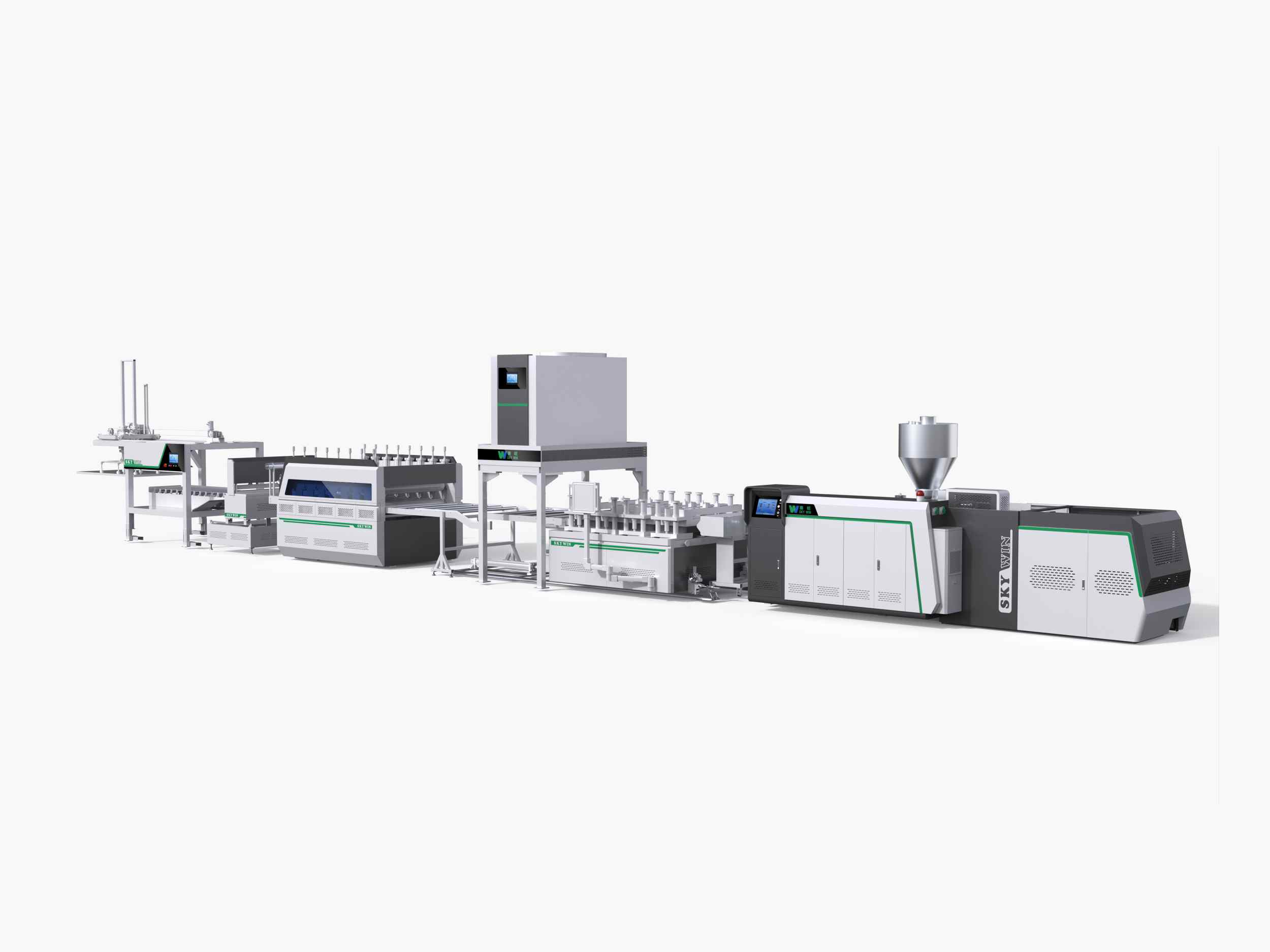
SPC flooring manufacturing generally begins with preparing and blending the raw materials. The compound is then processed through an extruder, formed into a continuous sheet, and passed through downstream equipment for calendering, lamination, cooling, trimming, and cutting. Further flooring processes may include surface finishing, profiling, and final packaging, depending on the factory's product range.
For a plant producing SPC core sheets, the primary equipment can be grouped into several functional stages:
Not every factory needs to purchase every unit as a separate machine. Some functions can be integrated into a complete production line, while other operations may be performed by auxiliary equipment or separate downstream machines. The supplier should confirm which functions are included in the quotation.
SPC flooring compounds commonly contain PVC resin, calcium carbonate, stabilizers, and other formulation-specific additives. The proportions and processing requirements vary according to the product specification and the manufacturer's formulation.
Before extrusion, the ingredients need to be measured and blended according to the production recipe. Consistent raw material preparation helps maintain a uniform compound and reduces variation during downstream processing.
A typical raw material preparation area may require:
The exact equipment depends on the plant's planned output and whether the factory will prepare its own compound or receive pre-blended material. When evaluating an SPC flooring extrusion line, buyers should clarify which raw material preparation systems are included and which must be sourced separately.
Good mixing cannot compensate for an unsuitable formulation, and a high-capacity extruder cannot eliminate every problem caused by inconsistent raw materials. The preparation process and extrusion configuration should therefore be planned together.
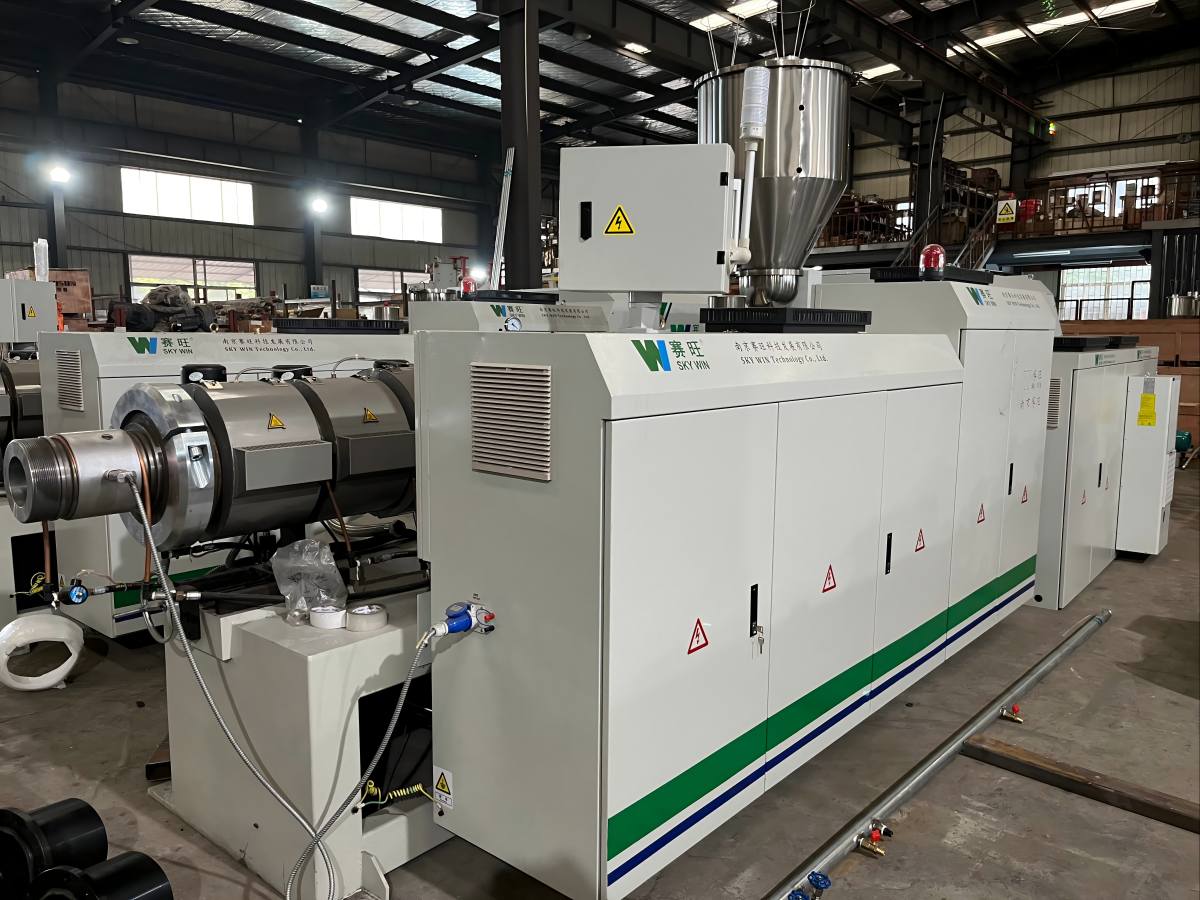
The extruder is the core machine in an SPC flooring production line. It processes the prepared PVC-based compound through controlled heating, mixing, plasticization, and continuous extrusion. Its configuration needs to match the material formulation, target sheet dimensions, and required production output.
SKY WIN's published SPC/PVC flooring sheet extrusion line uses a high-torque conical twin-screw extruder. The product page identifies PVC resin and calcium carbonate as principal raw materials for this equipment.
When selecting the extrusion system, manufacturers should evaluate the following factors:
SKY WIN publishes several SWDB5 configurations with different extruder sizes and rated output ranges. The listed output ranges vary by model, so the factory should not select a machine based on capacity alone. The supplier should confirm the expected output for the intended sheet width, thickness, formulation, and operating conditions.
After extrusion, the material must be formed into a sheet with the required dimensions and surface characteristics. The calendering system helps control sheet thickness and surface finish as the material passes through the rollers.
The suitable roller arrangement depends on the product structure, sheet width, thickness range, and whether lamination or embossing is integrated into the line. These requirements should be discussed before the machine configuration is finalized.
SKY WIN's published SWDB5 equipment list includes a five-roll laminator, a laminating unit, and an oil-heated roll system. These components support sheet forming and related surface-layer processing within the specified line configuration.
When comparing equipment proposals, ask the supplier how roller temperature, pressure, alignment, and line speed are controlled. These parameters affect the ability to maintain uniform sheet thickness and stable bonding between layers when online lamination is used.
For projects that require a different base sheet configuration, SKY WIN also offers a PVC/WPC flooring base material extrusion line. This equipment is designed to integrate mixing, extrusion, calendering, cooling, and cutting for flooring base material production. The appropriate line should be selected according to the actual material and finished product requirements.
Many SPC flooring products use a decorative film and a transparent wear layer to achieve their required appearance and surface performance. Depending on the production method, these layers may be applied through an online lamination process or handled through a separate downstream operation.
Online lamination can combine multiple processing steps into a continuous production process, but the required configuration depends on the flooring structure and bonding requirements. Buyers should confirm which layers can be applied on the line, how temperature and pressure are controlled, and whether embossing is included.
Before purchasing lamination equipment, clarify:
SKY WIN lists separate controls for online lamination and embossing on its SPC/PVC flooring sheet extrusion line. Buyers can review the configuration on the SPC/PVC sheet extrusion line product page and confirm which options are included in their proposed setup.
Cooling and downstream handling equipment are essential parts of a continuous flooring sheet production line. After forming and lamination, the sheet needs to cool under suitable conditions before it is trimmed and cut to the required dimensions.
Insufficient or uneven cooling may contribute to dimensional variation, internal stress, or sheet deformation. The appropriate cooling method and capacity depend on the material, sheet thickness, line speed, and production configuration.
SKY WIN's published SWDB5 equipment list includes a cooling support frame, two cooling systems, an edge trimmer, a haul-off unit, and a high-speed sheet cutter. Each unit performs a different function:
These units need to operate in coordination with the extruder and forming system. When requesting a quotation, confirm the permitted sheet dimensions, cutting tolerances, line speed range, and the level of automatic synchronization included in the configuration.
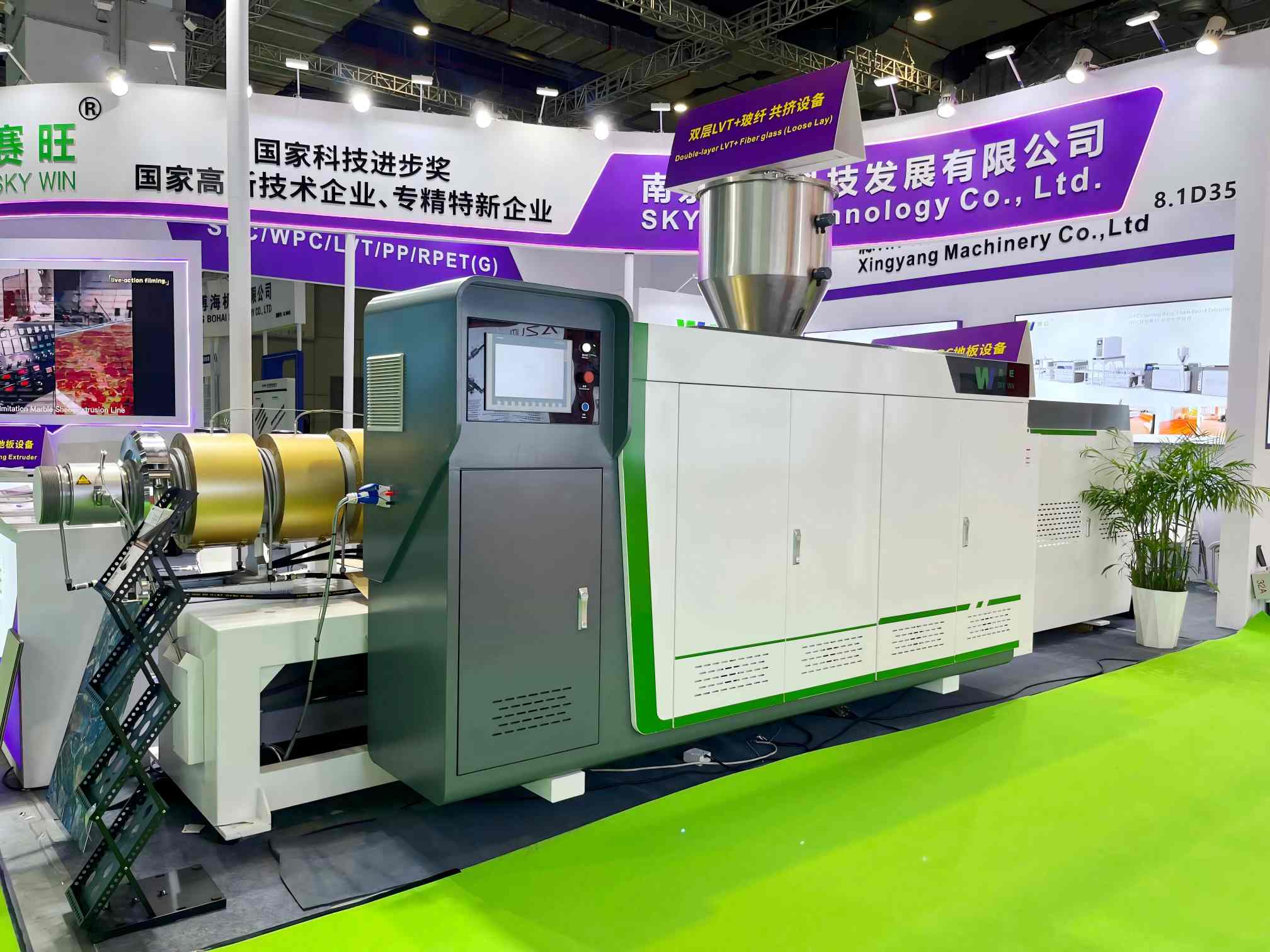
The electrical control system coordinates the major production units and allows operators to monitor operating parameters. Depending on the line configuration, control functions may include temperature adjustment, speed settings, equipment status monitoring, and coordination between extrusion and downstream sections.
For a new factory, the control system should be considered together with operator training, maintenance access, safety procedures, and production monitoring requirements. Ask the supplier which control functions are standard and which are optional.
Quality inspection equipment is also important. The factory should establish inspection procedures for sheet thickness, width, surface appearance, and other product-specific requirements. Additional tests may be needed for dimensional stability, bonding, or finished flooring performance, depending on the intended product and applicable standards.
Inspection tools and test equipment should be selected according to the quality plan. Do not assume that every laboratory test or finished-flooring test is included with an extrusion line; confirm the scope with the supplier before finalizing the investment.
Even when the production equipment is correctly selected, the factory needs suitable infrastructure to operate efficiently. Before installation, review the available floor area, electrical supply, cooling water requirements, ventilation, material storage, and safe access for operators and maintenance personnel.
The production layout should provide enough room for the complete extrusion line and for moving raw materials, finished sheets, tools, and replacement parts. The installation plan should also account for equipment foundations, lifting access, maintenance clearances, and the movement of finished products to subsequent processing or storage areas.
Depending on the planned production process, the factory may also need:
These requirements vary by equipment configuration and local regulations. Ask the manufacturer for installation drawings, utility specifications, equipment dimensions, and foundation requirements before preparing the factory floor.
The required equipment configuration should follow the factory's production plan rather than an arbitrary target capacity. Before choosing a model, estimate the expected sales volume, product mix, working hours, maintenance time, and planned production changes.
SKY WIN's published SWDB5 series lists model-dependent output ranges from 600–800 kg/h for the SWDB5-2 to 3,000–4,000 kg/h for the SWDB5-6. These are published equipment figures, not a guarantee of output for every formulation or product. The actual production target should be confirmed with the supplier under the intended operating conditions.
When comparing quotations, evaluate the total project cost rather than the price of the main extruder alone. The complete investment may include:
For manufacturers planning to expand their product range, it is also worth reviewing whether a separate LVT or WPC line would better match the intended product structure. SKY WIN provides an LVT flooring high-speed extrusion line for LVT sheet production. Equipment compatibility should be confirmed with the supplier rather than assuming that one line can manufacture every flooring type without configuration changes.
Before signing a purchase contract, prepare a written equipment specification and ask the supplier to confirm the scope of supply. This helps avoid misunderstandings about which machines, auxiliary units, services, and technical documents are included.
Use the following checklist when comparing equipment proposals:
SKY WIN has been developing extrusion equipment for SPC and WPC applications since 2004, according to its company profile. For manufacturers evaluating a new factory project, the next step is to share the planned flooring specifications and production target so the equipment configuration can be reviewed against the actual requirements.
To explore the main equipment configuration, visit the SKY WIN SPC flooring extrusion line product page or contact the company to discuss your factory layout, output requirements, and project scope.
A typical plant needs raw material preparation and mixing equipment, a conical twin-screw extruder, sheet forming and calendering equipment, lamination equipment when required, cooling systems, edge trimming, haul-off, cutting, electrical controls, and quality inspection tools. The exact configuration depends on the product and production plan.
The extruder is the core processing machine because it plasticizes and continuously extrudes the PVC-based compound. However, consistent production also depends on suitable raw material preparation, sheet forming, cooling, and downstream handling equipment.
SPC flooring compounds commonly contain PVC resin, calcium carbonate, stabilizers, and other formulation-specific additives. The precise recipe depends on the required product properties and should be developed and validated for the intended manufacturing process.
The calendering system helps form the extruded material into a sheet and control its thickness and surface characteristics. The required roller arrangement depends on the product dimensions, surface requirements, and whether lamination or embossing is integrated into the process.
Estimate expected sales volume, working hours, product dimensions, material formulation, maintenance time, and planned downtime. Then ask the equipment supplier to confirm the achievable output for the intended product instead of relying only on the maximum rated capacity.
Some extrusion line configurations may support more than one flooring product, but compatibility depends on the material formulation, product structure, tooling, lamination process, and downstream requirements. Confirm the permitted applications with the manufacturer before purchasing.
Common requirements include a suitable electrical supply, cooling water where specified, compressed air if required, adequate ventilation, material storage, and safe space for installation and maintenance. The final requirements should be based on the supplier's equipment drawings and utility specifications.
Confirm the product specifications, achievable output, equipment configuration, included auxiliary machines, utility requirements, installation scope, training, warranty, spare parts, and after-sales support. Compare quotations against the same written requirements to make a fair assessment.
Planning an SPC flooring factory starts with a clear understanding of the intended product and production target. By matching raw material preparation, extrusion, forming, cooling, and downstream equipment to those requirements, manufacturers can build a more practical production system. Contact SKY WIN to discuss your SPC flooring project and request a configuration based on your product specifications and factory needs.
No.18,Huixin Rd.,Yangtze River Dev.Zone,Nanjing 211505China



 IPv6 network supported.
leave a message
Scan to Wechat :

Scan to WhatsApp :