
leave a message
If you are interested in our products and want to know more details,please leave a message here,we will reply you as soon as we can.

Purchasing a turnkey flooring production line is a major investment for any manufacturer planning to enter or expand in the flooring industry. Beyond the initial equipment price, buyers need to consider production capacity, product compatibility, machine configuration, factory requirements, installation, and long-term technical support.
A turnkey solution should do more than supply individual machines. It should provide a coordinated production system that matches the manufacturer's flooring products, raw materials, output targets, and operating conditions. Whether the project involves SPC, LVT, or WPC flooring, selecting the right equipment configuration from the beginning can help reduce installation problems, improve production efficiency, and avoid unnecessary costs.
So, what should buyers check before purchasing a turnkey flooring production line? The following guide explains the key points to evaluate when comparing flooring equipment manufacturers and planning a new production project.
Before comparing suppliers, buyers should clarify what the term turnkey actually covers. Not every manufacturer includes the same equipment and services in its quotation. Some suppliers provide only the main extrusion machinery, while others offer a more integrated solution covering material preparation, extrusion, forming, cooling, cutting, electrical control, installation, and commissioning.
A complete flooring production system may include the following equipment, depending on the flooring type and manufacturing process:
Not every project requires all these components. For example, a manufacturer producing basic flooring base sheets may need a different configuration from a factory producing laminated flooring products. Buyers should therefore request a detailed equipment list and confirm which machines are included in the proposed turnkey flooring manufacturing solution.

An integrated flooring extrusion production line from SKY WIN.
One of the first technical decisions is determining which flooring products the factory intends to manufacture. SPC, LVT, and WPC flooring have different material compositions, core structures, and processing requirements. A production line designed for one product should not automatically be assumed to handle another without checking its configuration.
Here are some important differences buyers should understand:
SPC Flooring: Stone Plastic Composite flooring generally uses PVC resin, calcium carbonate, stabilizers, and other additives. Its rigid core structure requires an extrusion system capable of processing PVC-based compounds with a relatively high mineral filler content. A conical twin-screw extruder is commonly used for this application.
LVT Flooring: Luxury Vinyl Tile is a more flexible vinyl flooring product. Its manufacturing process may involve extrusion, calendering, and lamination. Buyers should pay particular attention to sheet thickness control, roller configuration, layer bonding, and cooling performance.
WPC Flooring: Wood Plastic Composite flooring uses a combination of polymer materials and wood-based components. The material formulation and processing conditions differ from conventional SPC production, so the extrusion system and downstream equipment need to be selected accordingly.
For manufacturers comparing these technologies, SKY WIN provides a range of SPC/LVT/WPC Flooring Extrusion Machines designed for different flooring manufacturing applications.
Before requesting a quotation, provide the supplier with your intended flooring structure, material formulation, sheet dimensions, and surface requirements. This information helps determine whether a standard machine configuration is suitable or whether a customized solution is needed.
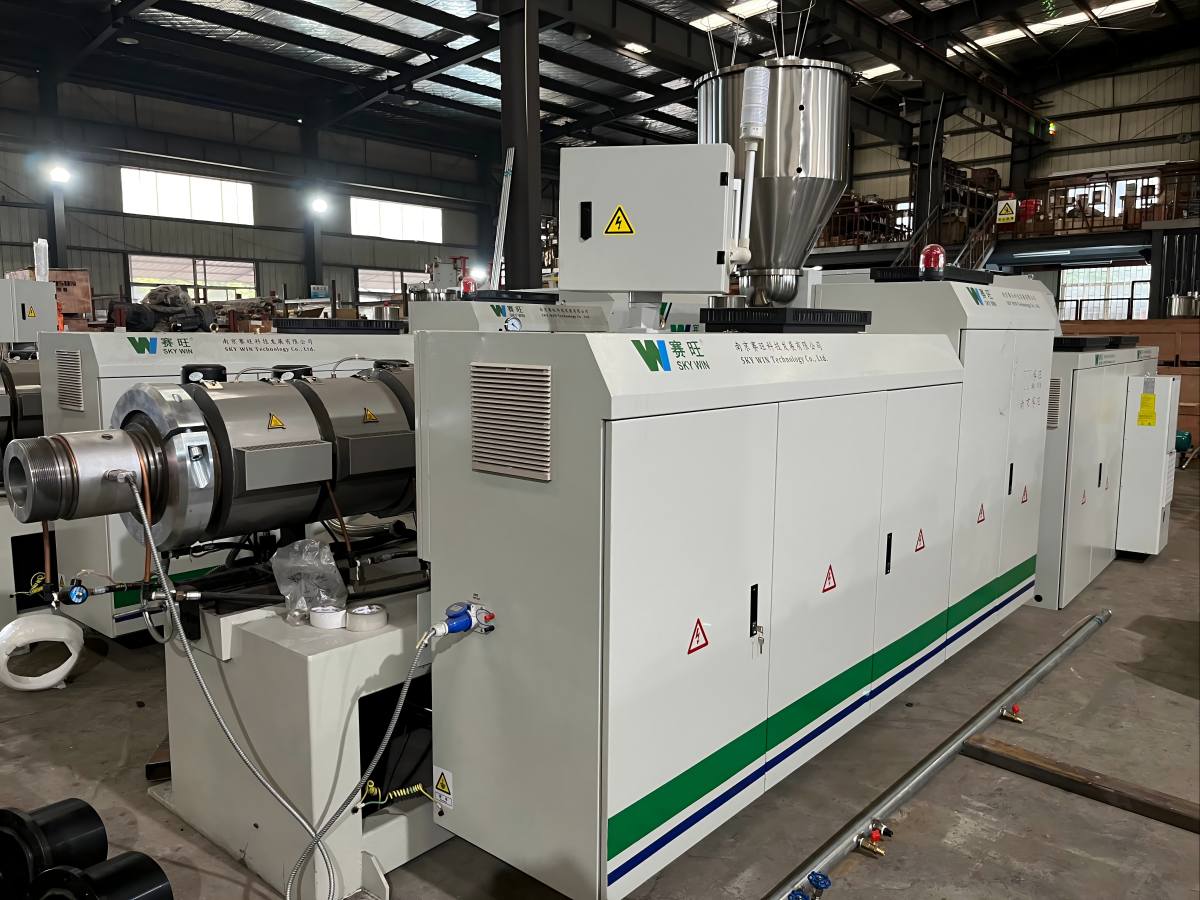
Flooring extrusion equipment manufactured in the SKY WIN workshop.
Production capacity is one of the most important factors when evaluating a flooring production line. However, buyers should not select equipment based only on the highest output figure in a product brochure.
Actual output depends on several conditions, including material formulation, sheet width, sheet thickness, extrusion speed, cooling performance, and downstream equipment capacity. If the extruder can produce material faster than the cooling or cutting section can handle, the entire production line may need to operate below its rated capacity.
For example, SKY WIN's SWDB5 series PVC flooring extrusion line lists different model configurations with published output ranges from 600–800 kg/h to 3,000–4,000 kg/h. The series also specifies a sheet thickness range of 1.5–7 mm and a sheet width range of 970–1,220 mm. These specifications provide a starting point for equipment comparison, but the achievable output should be confirmed against the buyer's actual product requirements.
Buyers should confirm the following details before selecting a machine model:
It is also useful to ask the supplier whether the quoted production capacity is based on a specific material formulation and finished sheet specification. This makes it easier to compare different manufacturers on the same technical basis.
For a closer look at the equipment configuration and available models, buyers can review SKY WIN's PVC Flooring SPC/LVT Sheet Extrusion Line.
The main extruder plays a central role in flooring manufacturing, but its performance cannot be evaluated separately from the rest of the production system.
For PVC-based flooring materials, buyers should pay attention to screw design, plasticizing performance, mixing capability, temperature control, and wear resistance. These factors influence how consistently the material is processed and delivered to the forming section.
When evaluating the main extrusion equipment, ask the manufacturer:
The downstream equipment deserves the same attention. Calendering rollers, cooling units, laminating systems, haul-off devices, and cutting machines must work together at compatible operating speeds.
For instance, an LVT production line needs particular attention to flexible sheet handling, roller configuration, layer bonding, and cooling. SKY WIN's LVT Flooring High-speed Extrusion Line integrates extrusion, calendering, and lamination technologies, with optional configurations such as embossing and online thickness control.
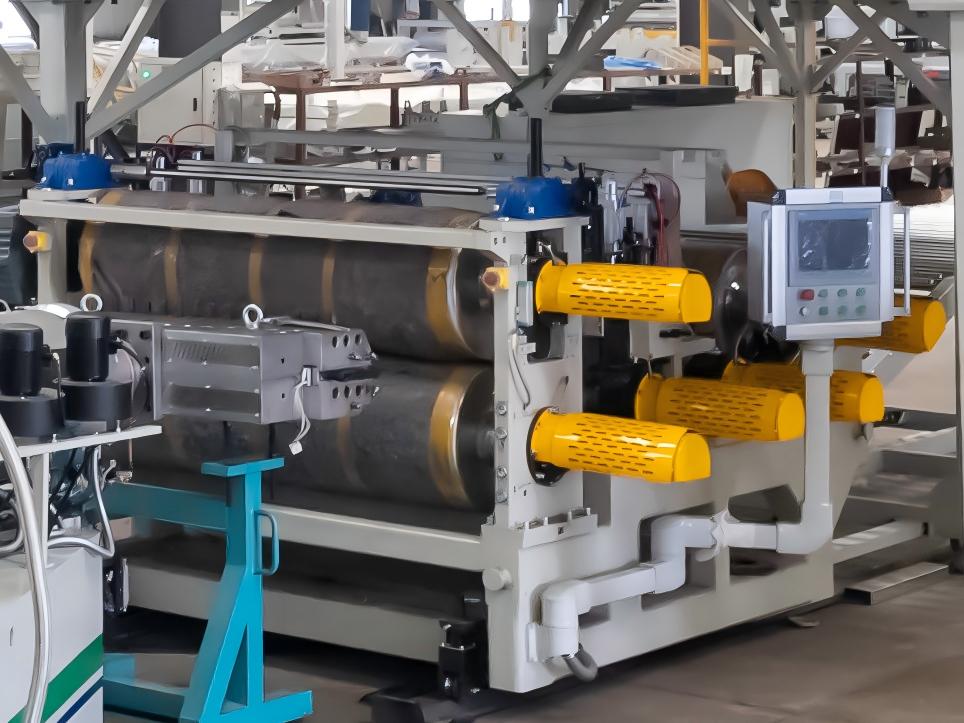
Calendering equipment for flooring sheet forming and processing.
Automation affects production efficiency, labor requirements, and the consistency of daily operation. When purchasing a turnkey flooring production line, buyers should understand which processes are automated and which still require manual intervention.
Depending on the equipment configuration, automation functions may include centralized control, temperature monitoring, synchronized line speed adjustment, online thickness monitoring, automatic cutting, and product handling.
However, a higher level of automation does not always mean a better investment. The system should match the factory's production volume, operator experience, and budget.
Consider these questions when discussing automation with a supplier:
Buyers should also confirm which automation functions are included in the standard quotation and which are optional. This prevents unexpected costs when the equipment is delivered or installed.
A turnkey flooring production line needs sufficient factory space and suitable operating conditions. Even when the machinery meets all technical specifications, an unsuitable factory layout can create difficulties during installation, material handling, maintenance, and daily production.
Before confirming the order, request the overall equipment layout and installation dimensions from the supplier. The factory should have enough space for the complete production process, including raw material preparation, extrusion, cooling, cutting, finished product handling, and maintenance access.
Other important requirements include:
Providing the factory dimensions and utility information before equipment manufacturing allows the supplier to prepare a more practical production layout and identify potential installation problems earlier.
The initial purchase price is only one part of the total investment. A flooring production line will also involve electricity consumption, raw material costs, maintenance, spare parts, labor, and production downtime.
Two machines with similar output specifications may have different operating costs depending on their motor configuration, heating systems, control technology, and overall equipment design.
Buyers should therefore request practical information about:
It is important to distinguish between total installed power and actual operating energy consumption. Installed power indicates the electrical capacity required by the equipment, while actual consumption varies with operating conditions and production loads.
A suitable equipment configuration should balance production output, product quality, energy use, and maintenance requirements rather than focusing only on the lowest purchase price.
For overseas buyers, installation and commissioning support can be particularly important. A complete machinery package does not automatically mean the production line will be ready for operation immediately after delivery.
Proper installation involves positioning the equipment, connecting electrical and utility systems, checking machine alignment, configuring operating parameters, and testing the coordination between different processing sections.
Before purchasing, clarify whether the supplier provides:
For manufacturers establishing a new flooring factory, operator training is especially valuable. Employees need to understand normal machine operation, production parameter adjustments, routine inspections, and basic troubleshooting procedures.
SKY WIN provides extrusion equipment solutions for SPC, LVT, and WPC flooring applications. Buyers can discuss their project requirements with the technical team to understand the available equipment configurations and installation support options.
Choosing the right equipment manufacturer is just as important as choosing the machinery itself. A reliable supplier should understand the flooring manufacturing process and be able to explain why a particular equipment configuration is suitable for the buyer's production requirements.
When evaluating a flooring production line manufacturer, consider the following:
SKY WIN Technology Co., Ltd. has been engaged in the research, development, and manufacturing of flooring extrusion machinery since 2004. Its product portfolio covers SPC, LVT, and WPC flooring extrusion equipment, as well as related plastic extrusion machinery.
For buyers planning a complete flooring manufacturing project, the important point is to evaluate the supplier's ability to coordinate equipment selection, production requirements, and technical support rather than comparing individual machine prices alone.
Before placing an order, buyers should prepare a written technical specification and confirm the full scope of supply. This helps both parties understand the equipment requirements and reduces the possibility of misunderstandings during manufacturing and installation.
The following checklist can help buyers compare different turnkey flooring production line proposals:
| Evaluation Area | What Buyers Should Confirm |
|---|---|
| Product specifications | Flooring type, structure, thickness, width, and surface requirements. |
| Production capacity | Expected output under the specified material and production conditions. |
| Equipment configuration | Extruder, calendering, cooling, lamination, cutting, and auxiliary equipment. |
| Automation | Control system, production synchronization, and automatic functions. |
| Factory requirements | Floor space, electrical supply, cooling water, and installation conditions. |
| Operating costs | Power consumption, maintenance, spare parts, and labor requirements. |
| Project support | Installation, commissioning, operator training, and technical assistance. |
| Commercial terms | Delivery schedule, warranty, payment terms, and acceptance criteria. |
Buyers should also define the equipment acceptance standards before signing the contract. These may include agreed production output, finished sheet dimensions, operating conditions, and product quality requirements. Clear acceptance criteria make the final equipment evaluation more objective.
Selecting a turnkey flooring production line is not simply about purchasing a collection of machines. It is about building a coordinated manufacturing system that can support the factory's current production targets and future development plans.
SKY WIN provides extrusion machinery for SPC, LVT, and WPC flooring production. Its product range covers different extrusion and processing configurations, allowing manufacturers to evaluate equipment according to their intended flooring products and manufacturing requirements.
From the main extruder to calendering, cooling, lamination, and cutting systems, equipment selection should be based on the complete production process rather than individual machine specifications.
For manufacturers planning a new factory or upgrading an existing production facility, SKY WIN can discuss the intended flooring type, raw material formulation, target output, and factory conditions to help identify a suitable equipment configuration.
Before making your investment, share your project specifications with SKY WIN and discuss the machinery, production capacity, and technical support required for your flooring manufacturing project.
What is included in a turnkey flooring production line?
A turnkey flooring production line may include raw material mixing, extrusion, calendering, lamination, cooling, trimming, cutting, electrical control, installation, and commissioning services. The exact scope depends on the flooring type and the supplier's quotation. Buyers should request a complete equipment and service list before ordering.
How do I choose the right flooring production line for my factory?
Start by identifying the flooring type, material formulation, sheet dimensions, required output, and available factory space. Then compare the extruder, downstream equipment, automation, utility requirements, and technical support to determine which configuration best matches your production plan.
What is the difference between SPC, LVT, and WPC flooring production lines?
SPC production lines process rigid PVC and mineral-filled composite materials. LVT production lines focus on flexible vinyl flooring sheets and may integrate extrusion, calendering, and lamination. WPC production lines process wood-plastic composite materials and require equipment configurations suitable for their specific formulations and product structures.
How much production capacity should a flooring production line have?
The required capacity depends on expected sales volume, operating hours, product dimensions, material formulation, and production efficiency. Buyers should calculate their actual manufacturing needs and confirm achievable output with the supplier instead of selecting a machine based only on its maximum rated capacity.
Can a turnkey flooring production line be customized?
Yes. Flooring production equipment can be configured according to product structure, raw materials, sheet width, thickness, target output, and automation requirements. Customization may involve the extruder, screw configuration, calendering system, lamination equipment, cooling section, and cutting units.
What should buyers check when comparing flooring machinery manufacturers?
Important factors include manufacturing experience, technical capabilities, equipment configuration, verified production capacity, project references, installation services, spare parts availability, warranty conditions, and after-sales technical support.
Does purchasing a turnkey flooring production line include installation and training?
Not necessarily. Installation, commissioning, and operator training depend on the supplier's project scope and commercial agreement. Buyers should confirm whether on-site support, remote assistance, operating manuals, and maintenance training are included before signing the contract.
How long does it take to install and start operating a flooring production line?
The timeline depends on equipment customization, manufacturing and delivery schedules, factory readiness, installation requirements, and commissioning procedures. Buyers should request a project schedule from the supplier covering production, shipment, installation, testing, and operator training.
What information should I provide when requesting a flooring production line quotation?
Provide the flooring type, raw material formulation, product structure, target sheet width and thickness, required production output, factory dimensions, electrical supply, and automation preferences. These details help the supplier recommend an equipment configuration and prepare a more accurate quotation.
No.18,Huixin Rd.,Yangtze River Dev.Zone,Nanjing 211505China



 IPv6 network supported.
leave a message
Scan to Wechat :

Scan to WhatsApp :